
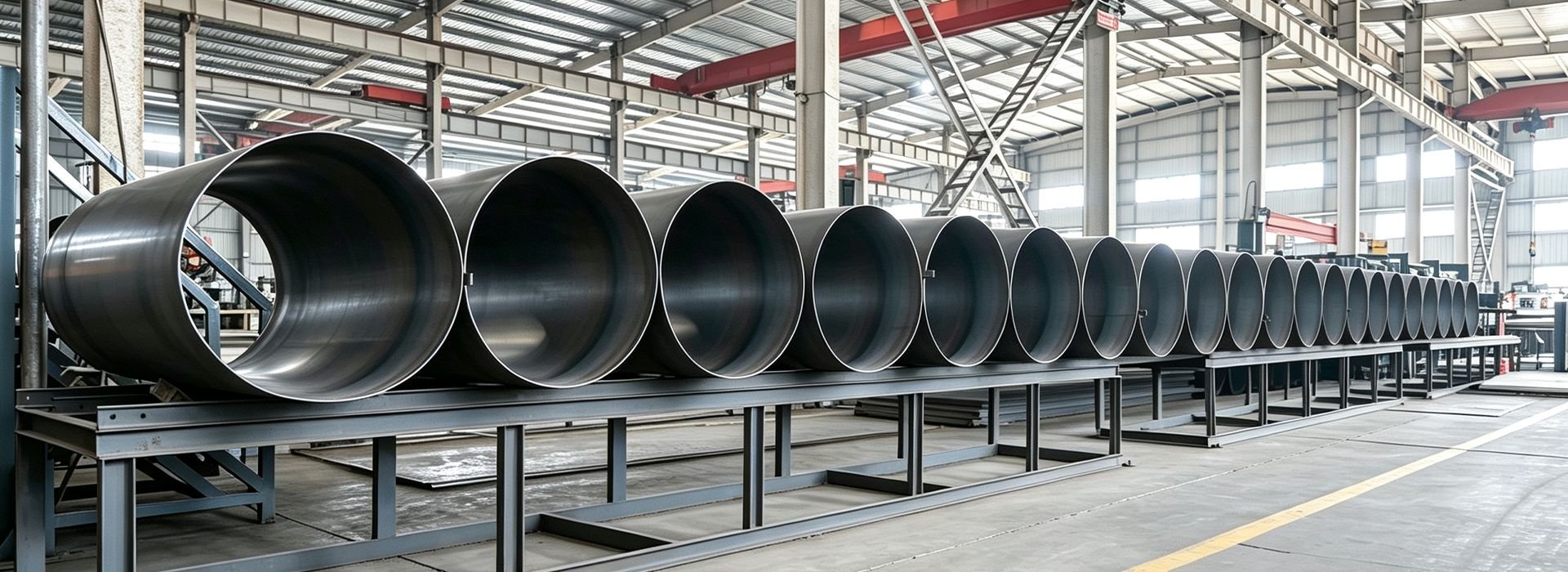
Stay updated with the latest company news, product innovations, exhibition highlights, and industry trends. Explore valuable insights into pressure vessel technologies and global markets.
International transportation of custom air receiver tanks presents unique logistical challenges stemming from their classification as pressure vessels, substantial weight and dimensions, specialized handling requirements, and complex regulatory compliance across multiple jurisdictions. Unlike standard industrial equipment, air receivers require careful coordination among manufacturers, freight forwarders, customs brokers, insurance providers, and end customers to ensure safe, compliant, and cost-effective delivery from production facilities to final installation sites.
Shipping failures result in costly consequences including cargo damage requiring expensive repairs or complete replacement, customs delays incurring demurrage charges and project schedule disruptions, regulatory non-compliance triggering fines or shipment seizures, and customer relationship damage affecting future business opportunities. Proactive logistics planning mitigates these risks through proper packaging, accurate documentation, appropriate carrier selection, and comprehensive insurance coverage.
This comprehensive guide examines international shipping considerations for custom air receiver tanks covering packaging and protection strategies, transportation mode selection, regulatory compliance requirements, customs clearance procedures, insurance considerations, and risk management best practices. By understanding the complexities of global pressure vessel logistics, manufacturers and exporters develop robust shipping protocols ensuring successful international deliveries while optimizing costs and maintaining customer satisfaction.
Air receiver tanks require robust support systems preventing movement, deformation, and impact damage during transit:
Steel Cradle Design: Welded steel cradles conforming to tank curvature distribute weight evenly preventing point loads causing shell deformation. Cradle spacing calculations consider tank length, wall thickness, and weight distribution ensuring adequate support without overstressing any single location. Typical cradle configurations include:
● Two-craddle systems for tanks under 3 meters length
● Three-cradle arrangements for 3-6 meter tanks
● Four or more cradles for extra-long vessels exceeding 6 meters
Cradle width matches tank diameter plus 100-150mm clearance accommodating thermal expansion and minor dimensional variations. Curved contact surfaces lined with rubber or polymer padding prevent coating damage from metal-to-metal contact.
Lifting lugs welded to cradles enable crane handling without stressing tank nozzles or supports. Lug positioning balances load distribution preventing tilting during lifts. Load ratings clearly marked exceeding maximum tank weight by safety factor of 2:1 minimum.
Wooden Blocking and Bracing: Hardwood blocks (oak, maple) positioned between cradles and tank shells fill gaps preventing lateral movement. Block dimensions typically 100x100mm cross-section sized to withstand shipping forces without crushing. Blocks secured through bolting or strapping preventing displacement during vibration.
Corner posts and diagonal bracing create rigid frameworks resisting racking forces from container stacking or vessel rolling. Bracing lumber minimum 50x100mm nominal dimensions providing adequate stiffness. Joints use galvanized bolts rather than nails preventing loosening from vibration.
Vibration Damping: Rubber isolation pads between cradles and blocking absorb high-frequency vibrations reducing fatigue stresses on tank walls and welds. Pad hardness (Shore A 40-60) balances vibration isolation against stability requirements. Softer pads provide better damping though may allow excessive movement if not properly constrained.
Shock absorbers or spring-mounted cradles serve extreme applications though rarely justified for standard ocean freight where vibration levels remain moderate. Road transport over rough terrain benefits more from enhanced damping systems.
Extended ocean voyages expose tanks to salt spray, high humidity, and temperature cycling requiring protective measures:
Vapor Corrosion Inhibitors (VCI): VCI-impregnated films wrapped around tanks release corrosion-inhibiting vapors forming protective molecular layers on metal surfaces. Films conform to irregular shapes covering nozzles, flanges, and supports comprehensively.
Effectiveness persists 12-24 months sufficient for most shipping timelines.
VCI paper alternatives serve smaller components though films prove superior for large tanks. Combination approaches use VCI film for main body plus VCI bags for loose accessories (gauges, valves, drains) shipped alongside.
Desiccant packets supplement VCI protection absorbing moisture condensing inside wrapping. Silica gel or clay desiccants sized based on enclosed volume and expected humidity levels. Indicator cards show saturation status enabling replacement if needed during extended storage.
Coating Touch-Up Kits: Include matching primer, intermediate, and topcoat materials enabling field repairs of shipping damage. Color-coded containers prevent application errors. Application instructions specify surface preparation (wire brush minimum), ambient conditions (temperature, humidity), and cure times before handling.
Touch-up kits travel with shipments enabling immediate repair upon arrival before corrosion initiates at damaged locations. Quality control photographs document pre-shipment condition supporting damage claims if disputes arise.
End Cap Protection: Threaded nozzles and flanged connections receive protective caps preventing contamination and thread damage. Plastic caps suffice for short domestic shipments though metal or heavy-duty polymer caps better withstand international handling.
Caps secured through threading, clamping, or shrink-wrapping preventing loss during transit. Identification tags attached to caps indicate nozzle functions (inlet, outlet, drain, instrument) facilitating correct reassembly. Color coding distinguishes different connection types at glance.
Internal nozzle surfaces coated with rust preventive oils or greases providing additional protection beyond external measures. Food-grade lubricants required for sanitary applications preventing contamination concerns.
Transportation method selection depends on tank dimensions, destination infrastructure, and cost considerations:
Container Shipping Advantages:
● Weather protection eliminating exposure to rain, salt spray, and UV radiation
● Reduced handling minimizing damage risks from multiple transfers
● Tracking visibility through container numbering systems
● Lower insurance premiums reflecting reduced risk profiles
● Simplified customs clearance with standardized documentation
Container Limitations:
● Size constraints restrict maximum tank dimensions (typically 2.3m width, 2.6m height for standard containers)
● Weight limits (28-30 tonnes gross) may exclude very large receivers
● Door opening dimensions (2.3m wide x 2.3m high) limit loading access
● Higher per-unit costs compared to breakbulk for oversized cargo
Tank orientation within containers requires careful planning. Vertical tanks often ship horizontally lying on cradles maximizing space utilization though requiring reorientation at destination. Horizontal tanks fit naturally though length limitations apply.
Securing within containers uses twist-lock fittings engaging container floor pockets preventing lateral movement. Additional strapping to side walls resists longitudinal forces from acceleration/deceleration. Gap filling with dunnage bags prevents shifting during rough seas.
Breakbulk Shipping Characteristics:
● Accommodates unlimited dimensions and weights subject to vessel capacity
● Lower per-tonne costs for very large or heavy shipments
● Direct port-to-port routing avoiding transshipment delays
● Flexibility in stowage positioning optimizing vessel stability
Breakbulk Challenges:
● Weather exposure requiring enhanced protection systems
● Multiple handling events increasing damage probabilities
● Complex rigging operations demanding experienced stevedores
● Limited tracking visibility once loaded in holds
● Higher insurance costs reflecting increased risks
Heavy-lift vessels equipped with cranes capable of 500+ tonne lifts serve超大tank shipments. Project cargo specialists coordinate complex logistics including route surveys, bridge strength assessments, and permit acquisitions for oversize road transport from ports to final destinations.
Ro-Ro (roll-on/roll-off) vessels accept wheeled trailers carrying tanks enabling efficient loading/unloading though requiring road-worthy transport equipment. Tank dimensions must comply with highway regulations limiting width to 2.6m and height to 4.0m typically.
Pressure vessel classification triggers specific handling protocols:
Lifting Procedures: Crane operators require lifting plans detailing weight, center of gravity, sling angles, and rigging configurations. Certified lift supervisors oversee operations ensuring compliance with plans. Lift trials verify balance before full elevation preventing dangerous swings.
Sling materials selected based on tank surface protection needs. Nylon slings prevent coating damage though stretch characteristics require careful load monitoring. Wire rope slings offer superior strength though necessitate padding at contact points.
Spreader bars maintain sling angles preventing inward forces crushing tank shells. Bar lengths calculated based on tank diameter and desired sling angle (typically 60 degrees from horizontal). Load cells verify actual weights matching planned values identifying discrepancies before lifts.
Forklift Operations: Forklift pockets or pallet bases enable mechanical handling though capacity limitations restrict applicability to smaller tanks (<5 tonnes). Fork extensions distribute loads preventing concentrated stresses. Operator training emphasizes slow speeds and smooth movements preventing dynamic loads exceeding static ratings.
Clamp attachments gripping tank shells provide alternative handling though require padded jaws preventing coating damage. Clamp pressures carefully controlled avoiding shell deformation. Test lifts verify grip security before transport.
Road Transport Considerations: Oversize permits required when tanks exceed standard highway dimensions. Route surveys identify low bridges, narrow roads, and weight-restricted structures requiring avoidance or reinforcement. Pilot vehicles warn oncoming traffic and monitor clearances during transit.
Escort requirements vary by jurisdiction with some regions mandating police escorts for superloads. Time-of-day restrictions limit movement to off-peak hours reducing traffic impacts. Seasonal restrictions prohibit winter transport in mountainous regions due to ice hazards.
Temperature monitoring during road transport detects freezing conditions threatening water-filled tanks. Heating blankets or insulated wraps maintain temperatures above freezing preventing ice expansion damaging internals. Thermometers with alarms alert drivers to temperature deviations.
Regulatory Compliance and Documentation Pressure Vessel Shipping Regulations International transport of pressure vessels involves overlapping regulatory frameworks:
IMDG Code (International Maritime Dangerous Goods): While empty air receivers don't classify as dangerous goods, residual pressure or contaminated interiors may trigger IMDG requirements. Thorough draining, drying, and certification declaring vessels "gas-free" and "clean" avoids dangerous goods classification simplifying shipping.
If receivers previously contained hazardous gases (oxygen, acetylene, toxic process gases), special cleaning and purging procedures prove mandatory. Certification from qualified gas testing laboratories confirms safe conditions. Documentation accompanies shipments proving compliance.
Pressurized shipments (rare but sometimes requested for immediate commissioning) face strict IMDG regulations including proper classification, packaging, labeling, and documentation. Most carriers refuse pressurized vessels due to liability concerns making this approach impractical for standard commercial shipments.
ADR/RID Regulations (European Land Transport): European road (ADR) and rail (RID) regulations mirror IMDG principles requiring empty, clean, dry declarations for unrestricted transport. Residual contents exceeding threshold quantities trigger dangerous goods classifications requiring specialized carriers and documentation.
Driver training certifications verify competency handling potentially hazardous cargo. Vehicle equipment includes spill kits, fire extinguishers, and emergency response information.
Routing restrictions avoid tunnels and populated areas for certain classifications.
National Pressure Vessel Regulations: Import countries maintain pressure vessel registration requirements affecting shipping documentation. Some jurisdictions require pre-shipment inspections by approved agencies verifying code compliance before export.
Certificates accompany cargo facilitating customs clearance and local registration. Examples include:
● China: Special Equipment Manufacturing License verification
● India: Chief Controller of Explosives approvals for certain services
● Middle East countries: SASO (Saudi Arabia), ESMA (UAE) conformity assessments
● Russia: GOST-R certification through accredited bodies
Understanding destination requirements early prevents shipment delays from missing documentation. Manufacturers should maintain databases of country-specific requirements updating as regulations change.
Commercial Documentation Requirements
Accurate documentation facilitates smooth customs clearance and payment processing:
Commercial Invoice: Details transaction including seller/buyer information, product descriptions, quantities, unit prices, total values, Incoterms, and payment terms. HS codes (Harmonized System) classify goods for customs purposes with air receivers typically falling under:
● HS 7311.00: Containers for compressed or liquefied gas (steel)
● HS 7612.90: Aluminum containers (if applicable)
● HS 8414.80: Parts of air compressors (alternative classification)
Correct HS code selection affects duty rates and import restrictions. Consultation with customs brokers ensures appropriate classification avoiding penalties from misdeclaration.
Invoice values must reflect actual transaction prices though some countries assess duties on constructed values if invoices appear understated. Transfer pricing between related parties faces heightened scrutiny requiring arm's length justification.
Packing List: Itemizes shipment contents including tank dimensions, weights, serial numbers, and package counts. Detailed descriptions assist customs inspectors verifying cargo matches declarations. Photographs appended to packing lists provide visual references resolving identification questions.
Net and gross weights enable freight cost calculations and structural assessments. Volume measurements determine container utilization and stowage planning. Hazardous material declarations (if applicable) list chemical compositions and safety data.
Certificate of Origin: Establishes goods' manufacturing country determining preferential duty rates under free trade agreements. Chambers of Commerce or authorized bodies certify origins after verifying production records. Electronic certificates increasingly accepted reducing paper processing delays.
Rules of origin criteria vary by trade agreement requiring substantial transformation within claiming country. Simple assembly of imported components may not qualify depending on value-add thresholds. Manufacturers should understand applicable rules optimizing supply chain structures.
Bill of Lading (B/L): Contract of carriage between shipper and carrier documenting receipt of goods and terms of transport. Original B/Ls serve as title documents enabling cargo release at destination. Telex releases eliminate physical document transfer accelerating delivery though requiring trust between parties.
B/L descriptions should match commercial invoices avoiding discrepancies triggering customs queries. "Said to contain" language protects carriers from liability for interior contents though shippers remain responsible for accurate declarations.
Claused B/Ls noting visible damage or packaging deficiencies protect carrier interests though may complicate letter of credit negotiations. Clean B/Ls confirm apparent good order facilitating smoother transactions.
Insurance Certificate: Documents coverage terms including insured value, policy number, covered perils, and claim procedures. Certificates satisfy letter of credit requirements and provide proof of protection for all parties. Endorsements add additional insured parties (buyers, banks) as needed.
Coverage amounts typically 110% of CIF value accounting for potential appreciation during transit. Higher valuations justifiable for critical projects where delays impose severe penalties. Deductibles balance premium costs against self-insured retention capabilities.
International transactions frequently utilize letters of credit (L/C) requiring strict document compliance:
Documentary Requirements: L/Cs specify exact documents needed for payment including invoices, B/Ls, insurance certificates, inspection reports, and certificates of origin.
Discrepancies between documents and L/C terms enable banks refusing payment even if goods delivered satisfactorily.
Common discrepancies include:
● Date inconsistencies (invoice date after B/L date)
● Description mismatches between documents
● Missing signatures or stamps
● Incorrect party names or addresses
● Expired inspection certificates
Careful review of L/C terms before shipment identifies problematic requirements enabling negotiation of amendments. Standard UCP 600 (Uniform Customs and Practice) governs L/C operations though individual bank interpretations vary.
Inspection Certificates: Many L/Cs require third-party inspection verifying quantity, quality, and packaging before shipment. Approved inspection agencies (SGS, Bureau Veritas, Intertek) conduct examinations issuing certificates confirming compliance. Scheduling inspections requires lead time coordinating with production completion and vessel departures.
Inspection scope should clarify whether destructive testing, pressure testing, or detailed dimensional checks are included. Limited visual inspections prove faster though provide less assurance. Clear specifications prevent disputes over inspection adequacy.
Timing Constraints: L/Cs establish presentation deadlines (typically 21 days from B/L date) for document submission. Late presentations enable banks refusing payment regardless of document accuracy. Expedited courier services ensure timely delivery though increase costs.
Electronic document presentation through platforms like Bolero or essDOCS accelerates processing though requires participant enrollment. Traditional paper methods remain common necessitating careful timeline management.
Ocean shipping dominates international receiver tank transport due to cost-effectiveness for heavy cargo:
Carrier Selection Criteria:
● Service frequency matching required delivery timelines
● Port pair coverage avoiding transshipment delays
● Vessel age and condition affecting reliability
● Claims history indicating cargo handling quality
● Rate competitiveness balanced against service quality
Major carriers (Maersk, MSC, CMA CGM, COSCO) offer regular services though regional specialists may provide better coverage for niche routes. Freight forwarders leverage volume commitments securing preferential rates and space allocation during peak seasons.
Transit Time Considerations: Direct services prove fastest though limited in availability.
Transshipment adds 7-14 days depending on hub efficiency and connection frequency. Peak season congestion (August-October) extends transit times 1-3 weeks requiring schedule buffers.
Weather disruptions (typhoons, hurricanes) cause seasonal delays particularly on Pacific and Atlantic routes. Alternative routing through different ports avoids affected areas though increases distances. Real-time tracking enables proactive communication with customers regarding delays.
Port Infrastructure Assessment: Destination port capabilities affect discharge efficiency. Heavy-lift cranes handle tanks though not all ports possess adequate equipment.
Pre-arrival coordination with terminal operators confirms crane availability and scheduling preventing demurrage from waiting.
Storage facilities at destination ports accommodate cargo awaiting customs clearance or onward transport. Covered warehouses protect from weather though incur additional charges. Free time allowances (typically 3-7 days) before storage fees apply should align with expected clearance timelines.
Air transport proves rarely economical for standard air receivers due to weight and size though exceptions exist:
When Air Freight Applies:
● Emergency replacements for critical downtime situations
● Small specialty tanks (<500 liters) with high value-to-weight ratios
● Prototype or sample shipments for customer approval
● Components (nozzles, heads) rather than complete vessels
Cost comparisons demonstrate air freight premiums of 10-20x ocean rates making it prohibitive for routine shipments. However, total cost analysis including downtime losses may justify air freight for urgent requirements.
Aircraft Limitations: Cargo door dimensions restrict maximum piece sizes. Boeing 747 freighters accommodate pieces up to 3m height while smaller aircraft impose tighter constraints. Weight limits per piece (typically 5-10 tonnes) exclude large receivers.
Special handling requirements include reinforced pallets, certified lifting equipment, and trained ground crews. Not all airports possess adequate infrastructure requiring routing through major hubs adding complexity.
Documentation Differences: Air waybills replace bills of lading functioning as receipts rather than title documents. Faster transit reduces documentation timing pressures though customs clearance remains necessary at destination. Express courier services (DHL, FedEx) handle small shipments simplifying processes though at premium costs.
Combining transportation modes optimizes cost-service tradeoffs:
Sea-Air Combinations: Ocean transport to regional hub followed by air freight to final destination balances cost against speed. Example: Shanghai to Dubai by sea (14 days) then Dubai to Lagos by air (1 day) versus direct sea to Lagos (35 days). Total transit reduces 20 days though costs increase moderately.
Coordination between ocean and air carriers requires careful scheduling ensuring connections align. Buffer time accommodates ocean delays preventing missed air flights. Single forwarders managing both legs simplify coordination though may lack expertise in both modes.
Rail-Ocean Integration: Rail transport from inland factories to coastal ports reduces trucking distances and costs. China-Europe rail corridors offer alternatives to pure ocean shipping though capacity constraints and geopolitical risks affect reliability.
Intermodal containers facilitate mode transitions without cargo handling reducing damage risks. Container tracking systems provide visibility across all legs enabling proactive exception management.
Last-Mile Delivery Planning: Final transport from port to installation site requires specialized heavy haul carriers equipped for oversize loads. Route surveys identify obstacles (low bridges, weak roads, tight turns) requiring mitigation. Permits from local authorities authorize oversize movements specifying time windows and escort requirements.
Installation site accessibility assessment determines whether cranes can position tanks directly or whether secondary handling proves necessary. Ground conditions support heavy loads preventing settlement during placement. Coordination between delivery and installation teams minimizes equipment idle time.
Comprehensive insurance protection addresses multiple risk categories:
Marine Cargo Insurance: Institute Cargo Clauses (A, B, C) define coverage scopes with Clause A providing broadest protection (all risks except exclusions). Clauses B and C cover named perils only offering lower premiums but narrower protection.
Clause A recommended for high-value custom tanks covering:
● Physical damage from handling accidents
● Water damage from flooding or heavy rain
● Theft and pilferage
● General average contributions
● Salvage charges
Exclusions typically include war risks, strikes, inherent vice (pre-existing defects), and improper packaging. Separate war risk endorsements available for shipments through conflict zones though premiums increase substantially.
Warehouse-to-Warehouse Coverage: Extends protection from manufacturer's facility through transit to customer's installation site rather than terminating at port. This broader scope covers inland transportation, temporary storage, and final delivery addressing gaps in traditional port-to-port policies.
Time limits apply (typically 60 days after discharge) preventing indefinite coverage. Extensions available for projects experiencing delays though require notification and additional premiums.
Liability Insurance: Protects manufacturers against third-party claims arising from shipping incidents. Examples include damage to port facilities from dropped cargo, injury to stevedores during handling, or environmental contamination from leaked contents.
Coverage limits should reflect worst-case scenarios considering potential exposures. Umbrella policies provide excess coverage above primary limits protecting against catastrophic claims.
Efficient claims processing minimizes financial impacts from losses:
Immediate Notification: Insurers require prompt notification (typically within 3-7 days) of incidents enabling investigation while evidence remains fresh. Delayed notifications
jeopardize claims through evidence degradation or witness unavailability.
Photographic documentation captures damage extent, packaging condition, and surrounding circumstances. Multiple angles and close-ups provide comprehensive records supporting claim valuation. Video walkthroughs offer additional context though file sizes require management.
Surveyor Appointment: Insurance companies appoint independent surveyors assessing damage and determining causation. Surveyor reports form basis for claim settlements
though insured parties may engage own experts challenging unfavorable findings.
Survey attendance allows insured representatives presenting perspectives and ensuring thorough examinations. Prepared documentation (packing lists, photos, correspondence) facilitates surveyor evaluations. Cooperation accelerates claim resolution though adversarial approaches delay settlements.
Mitigation Obligations: Insured parties must take reasonable steps minimizing loss extents. Examples include arranging temporary repairs preventing further deterioration, salvaging undamaged components, and expediting replacement procurement.
Mitigation costs recoverable from insurers provided they prove reasonable and necessary.
Documentation of mitigation decisions and expenditures supports recovery claims. Failure to mitigate may reduce settlements through contributory negligence findings.
Settlement Negotiations: Claim amounts depend on policy terms, damage assessments, and depreciation calculations. Total losses settle at insured values minus deductibles while partial losses cover repair costs or diminished values.
Disputes over valuations may require expert appraisals or arbitration. Policy language interpretation drives many disagreements emphasizing importance of clear wording during placement. Broker advocacy assists insured parties navigating complex negotiations.
Proactive risk management reduces loss frequencies and severities:
Pre-Shipment Inspections: Third-party verification of packaging adequacy, documentation completeness, and tank condition before loading identifies issues correctable prior to transit.
Inspection reports provide baseline evidence supporting damage claims if incidents occur. Checklists ensure systematic reviews covering:
● Cradle integrity and securement
● Coating condition and touch-up kit inclusion
● Documentation accuracy and completeness
● Weight and dimension verification
● Protective wrapping adequacy
Carrier Qualification: Vetting transportation providers through safety records, equipment audits, and reference checks selects reliable partners. Preferred carrier programs establish long-term relationships improving service consistency and pricing.
Performance metrics track on-time delivery, damage rates, and claim frequencies identifying underperformers for replacement. Regular business reviews address issues and implement improvements maintaining service quality.
Packaging Testing: Prototype packaging designs undergo simulated shipping tests (vibration, drop, compression) validating protection effectiveness before production
shipments. Test results guide design refinements preventing field failures.
Standards such as ISTA (International Safe Transit Association) provide testing protocols though custom designs may require bespoke procedures. Collaboration with packaging engineers ensures scientifically sound approaches.
Customer Education: Sharing handling instructions, unpacking procedures, and inspection checklists empowers customers participating safely in delivery processes. Multilingual materials accommodate international recipients preventing misunderstandings.
Video demonstrations prove more effective than written instructions for complex procedures. QR codes on packaging link to online resources providing instant access to guidance.
A manufacturer exported three 15-meter long, 4-meter diameter carbon steel receivers (85 tonnes each) to a Saudi Arabian petrochemical complex requiring specialized logistics:
Challenges Addressed:
● Dimensions exceeded standard container capabilities necessitating breakbulk shipping
● Desert climate required enhanced corrosion protection during 6-week ocean voyage
● Remote inland destination (400km from port) demanded oversize road transport permits
● Strict SASO certification requirements needed pre-shipment compliance verification
Solutions Implemented:
● Custom steel cradles with rubber padding protected coatings during ocean transit
● VCI wrapping plus desiccant systems prevented salt spray corrosion
● Pre-shipment SASO inspection by approved agency secured conformity certificates
● Heavy-lift vessel charter avoided transshipment delays
● Route survey identified bridge reinforcements needed for road transport
● Local partner coordinated permits and escorts for oversize movement
Results Achieved:
● Zero damage despite extreme dimensions and multiple handling events
● On-time delivery enabling project commissioning as scheduled
● Smooth customs clearance completing in 3 days versus typical 2-week delays
● Customer satisfaction leading to repeat orders worth $2.3 million
Total logistics cost represented 18% of equipment value higher than standard 8-10% though justified through risk mitigation and schedule certainty.
Emergency Air Freight Replacement to Europe
German automotive plant experienced catastrophic receiver failure halting production line costing €50,000/hour. Manufacturer arranged emergency replacement via air freight:
Rapid Response Actions:
● Priority production completing replacement tank in 48 hours versus normal 3-week lead time
● Expedited ASME inspection and certification securing same-day stamping
● Charter cargo flight from Shanghai to Frankfurt bypassing commercial schedule limitations
● Pre-cleared customs documentation enabling immediate release upon arrival
● Dedicated truck delivery from airport to plant within 4 hours of landing
Cost-Benefit Analysis:
● Air freight cost: €45,000 (versus €3,000 ocean freight)
● Production loss avoided: €600,000 (12 hours downtime prevented)
● Net benefit: €555,000 justifying premium transportation
This case demonstrates total cost thinking beyond simple freight rate comparisons. Critical applications warrant contingency planning including pre-positioned spare inventory or
expedited shipping agreements.
Customs Delay Resolution in Brazil
Shipment of stainless steel receivers to Brazilian food processor encountered customs hold lasting 3 weeks due to documentation discrepancies:
Root Causes Identified:
● Commercial invoice HS code mismatched import license classification
● Certificate of Origin lacked required chamber of commerce apostille
● Portuguese translation of technical specifications incomplete
● Import duty calculation disputed requiring engineering review
Resolution Steps:
● Engaged local customs broker with food industry experience
● Submitted corrected documentation with proper certifications
● Provided engineering calculations justifying HS code selection
● Negotiated partial duty payment under protest pending final determination
● Arranged bonded warehouse storage avoiding demurrage during dispute
Lessons Learned:
● Brazil requires meticulous documentation preparation with local language support
● Pre-shipment consultation with Brazilian customs experts prevents delays
● Bonded warehouse options provide flexibility during clearance disputes
● Relationship with experienced local broker proves invaluable navigating complex regulations
Subsequent shipments incorporated these lessons achieving clearance in 5-7 days demonstrating improvement from procedural refinements.
Best Practices Checklist
Pre-Shipment Preparation
● [ ] Verify tank drained, dried, and certified gas-free if required
● [ ] Design and fabricate appropriate cradles with lifting lugs
● [ ] Apply VCI wrapping and desiccant protection systems
● [ ] Prepare touch-up kits matching coating specifications
● [ ] Install protective caps on all nozzles and connections
● [ ] Conduct pre-shipment inspection documenting condition
● [ ] Confirm weight and dimensions for transportation planning
● [ ] Verify all documentation accuracy and completeness
Documentation Management
● [ ] Prepare commercial invoice with correct HS codes
● [ ] Create detailed packing list with photographs
● [ ] Obtain Certificate of Origin from authorized body
● [ ] Secure required certifications (ASME, PED, SASO, etc.)
● [ ] Arrange marine cargo insurance with warehouse-to-warehouse coverage
● [ ] Review letter of credit requirements if applicable
● [ ] Translate technical documents into destination language if required
● [ ] Prepare handling instructions for customer reference
Transportation Coordination
● [ ] Select appropriate transportation mode (ocean/air/multimodal)
● [ ] Book carrier space confirming vessel schedules and capacity
● [ ] Coordinate port operations including crane availability
● [ ] Arrange inland transportation from factory to port
● [ ] Plan last-mile delivery with oversize permits if needed
● [ ] Confirm destination port storage facilities and free time
● [ ] Establish tracking and communication protocols
● [ ] Prepare contingency plans for delays or disruptions
Risk Management
● [ ] Qualify carriers through safety audits and reference checks
● [ ] Test packaging designs through simulated shipping trials
● [ ] Educate customers on receiving and inspection procedures
● [ ] Maintain claim documentation templates for rapid response
● [ ] Review insurance coverage adequacy annually
● [ ] Monitor carrier performance metrics identifying issues
● [ ] Update shipping procedures based on lessons learned
● [ ] Conduct periodic risk assessments addressing new threats
International shipping of custom air receiver tanks demands sophisticated logistics coordination balancing cost efficiency against risk management, regulatory compliance, and customer service excellence. Success requires integrated approaches combining robust packaging, accurate documentation, appropriate carrier selection, comprehensive insurance, and proactive communication throughout transportation cycles.
Manufacturers developing standardized shipping protocols gain competitive advantages through predictable delivery performance, reduced damage rates, and streamlined customs clearance. Investment in logistics capabilities including qualified forwarder relationships, documentation expertise, and risk management systems yields returns through enhanced customer satisfaction, reduced claims costs, and expanded market access.
Emerging technologies including IoT tracking devices, blockchain documentation, and
AI-powered route optimization promise further improvements in visibility, efficiency, and reliability. However, fundamental principles of careful planning, attention to detail, and collaborative partnerships remain essential regardless of technological sophistication.
By implementing the best practices outlined in this guide, exporters transform international shipping from unpredictable challenge into manageable competitive capability enabling sustainable growth in global markets. The key lies not in any single element but in holistic integration of packaging, documentation, transportation, insurance, and risk management creating resilient supply chains delivering custom air receiver tanks safely and efficiently to customers worldwide.

Specializing in pressure vessel manufacturing, we provide reliable, certified, and customized solutions for customers across diverse industries worldwide.
No.268 Xinda Road, High-tech Industrial Park, Longkou City,Shandong Province
Copyright © 2026 Yantai Xinglong Pressure Vessel Manufacturing Co., Ltd All Rights Reserved.




 عربي
عربي
 Español
 Русский
