
Stay updated with the latest company news, product innovations, exhibition highlights, and industry trends. Explore valuable insights into pressure vessel technologies and global markets.
The distinction that decides whether your AI liquid cooling loop stays full, quiet and corrosion‑free
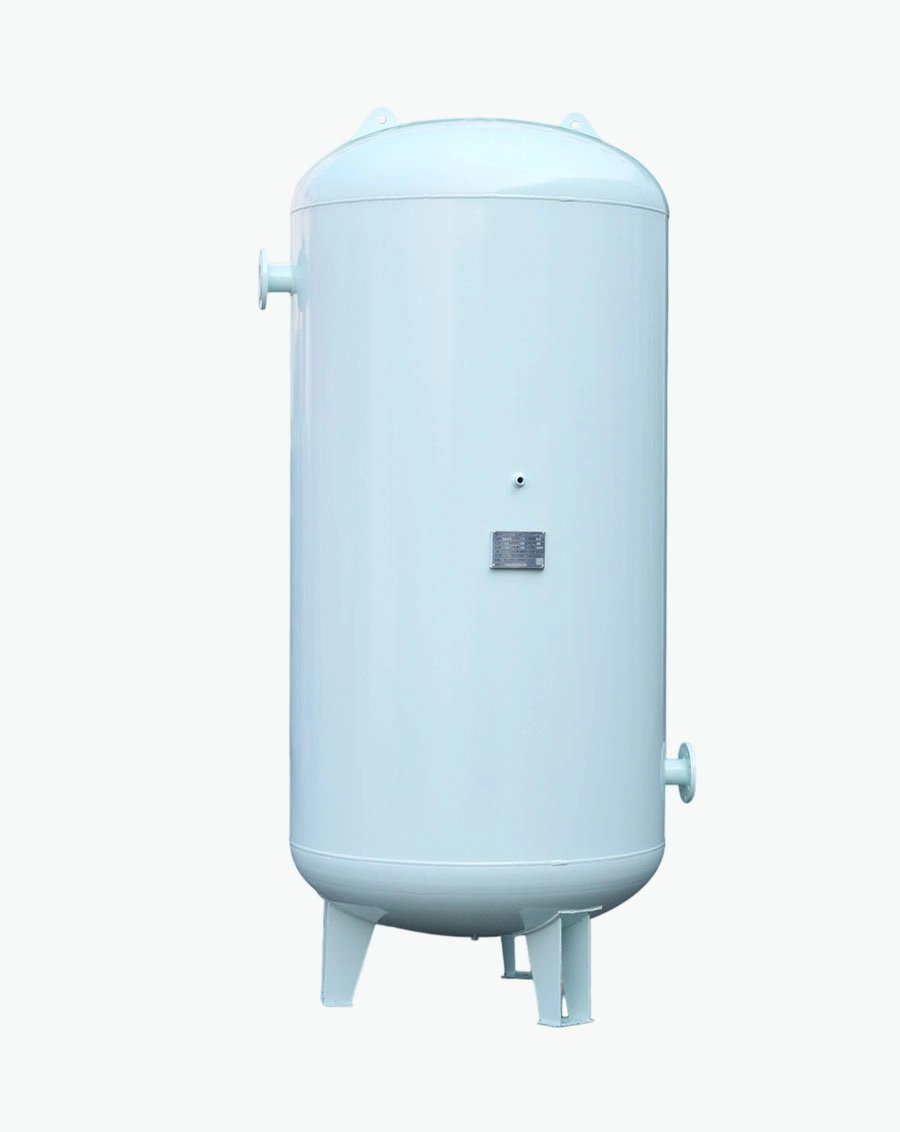
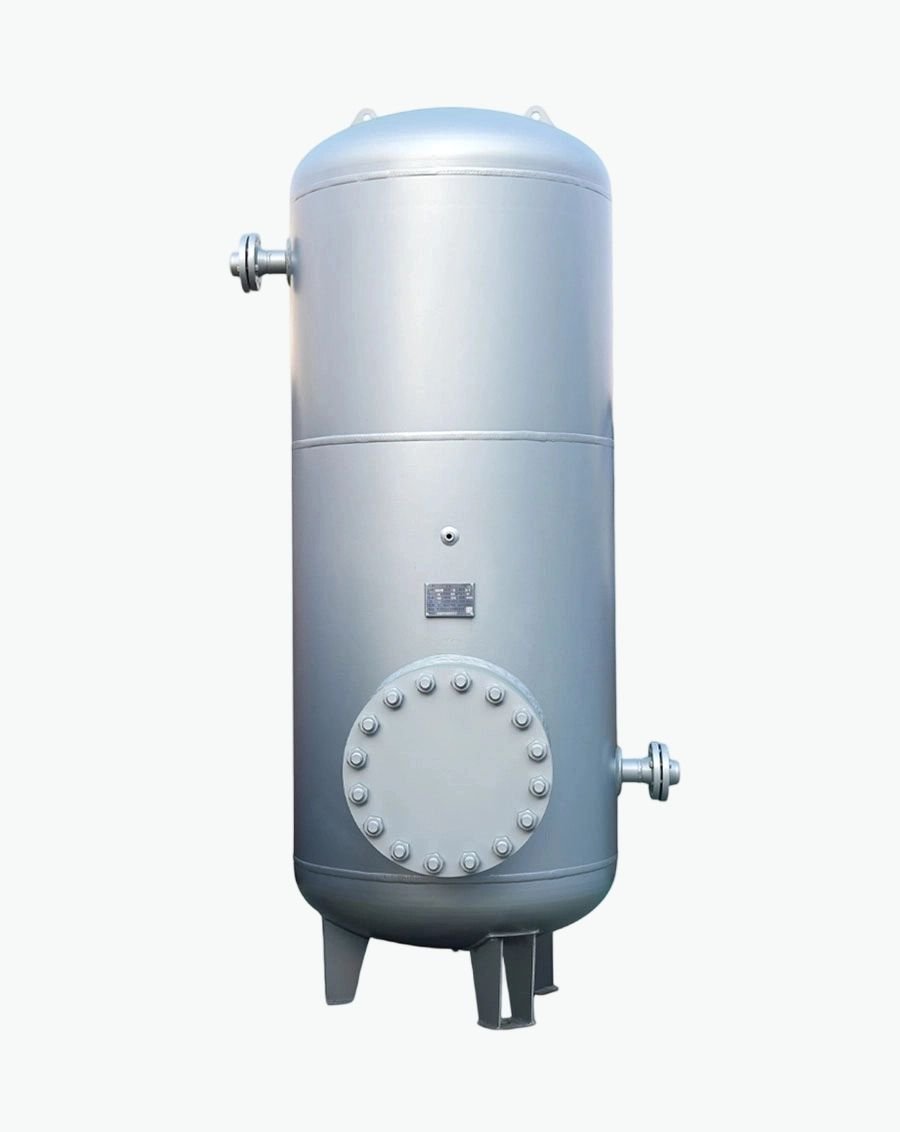
An expansion tank is a sealed, gas‑precharged vessel with an internal diaphragm or bladder. Its job is pressure control — absorbing coolant thermal expansion and holding a stable pressure floor across the loop.
A coolant reservoir (also called a buffer, surge, accumulator or make‑up tank) is a liquid‑full tank, usually vented or breather‑capped, with no gas cushion. Its jobs are fluid inventory, air release, pump suction head and make‑up.
They are not interchangeable. A reservoir cannot hold system pressure; an expansion tank cannot provide usable fluid inventory or deaeration dwell time.
In AI rack cooling, the CDU usually integrates both functions into one secondary‑side assembly, which is why the terms get confused on site.
Practical split: expansion tank working pressure commonly 3–6 bar gauge with a diaphragm; coolant reservoir working pressure from atmospheric up to roughly 2–3 bar, typically 50–500 L per CDU depending on racks served.
Ask three engineers in a project meeting for "the tank on the cooling loop" and you will get three different components. Procurement issues a purchase order for an expansion tank and receives a vented reservoir, or the reverse, and the loop either cannot hold pressure or has nowhere to store make‑up fluid. The confusion is amplified in AI data centers because a modern CDU genuinely does combine both roles in one skid.
The cleanest way to keep them apart is to ask what problem the component solves, not what it looks like.
If the problem is "the loop pressure moves when temperature moves" → you need an expansion tank.
If the problem is "the loop needs somewhere to hold extra fluid, release air and feed the pump" → you need a coolant reservoir.
| Parameter | Expansion tank | Coolant reservoir |
| Primary function | Absorb thermal expansion; hold system pressure | Store fluid inventory; release air; feed pump suction |
| Sealed or vented | Sealed, gas‑precharged | Vented / breather, or sealed low‑pressure |
| Internal membrane | Yes‑diaphragm or bladder | No |
| Gas cushion | Yes, nitrogen pre‑charged | Only a passive headspace |
| Typical working pressure | 3‑6 bar gauge (rating above safety valve setting) | Atmospheric up to ~2‑3 bar |
| Typical volume, secondary side | Tens to a few hundred litres | 50‑500 L per CDU, scaling with racks served |
| Stores usable coolant? | No‑volume is committed to compensation | Yes‑this is its purpose |
Expansion tank shells are commonly carbon steel with an internal coating and an EPDM or butyl membrane. Stainless‑steel‑shelled units with fluoroelastomer membranes are specified where coolant chemistry or cleanliness demands it. Confirm membrane compatibility with the actual fluid — glycol‑inhibited coolants and synthetic hydrocarbons behave differently, and some elastomers swell or embrittle.
Coolant reservoirs in technology cooling service are overwhelmingly stainless steel, because the fluid is clean, the loop is closed, and corrosion products from a carbon steel tank would circulate straight into 25 µm‑filtered microchannel cold plates. HDPE and PP appear in low‑pressure, atmospheric make‑up tanks where chemical resistance matters more than mechanical strength or pressure capability.
Whatever the material, three construction details separate a good reservoir from a poor one:
Weld quality and finish. TIG welding with back purge, followed by passivation, preserves the protective chromium oxide layer. A rough internal weld surface is a nucleation site for biofilm and a trap for particulate.
Baffle or quiescent zone. The inlet should not jet straight into the suction outlet. A baffle gives bubbles time to rise.
Access for cleaning. A removable lid or manway, a bottom drain and a fill connection at the top. Reservoirs are cleaned during coolant change‑out, which on inhibited glycol typically falls in a 3–7 year window.
Can I use a coolant reservoir as an expansion tank?No. Without a pre‑charged gas cushion, a vented reservoir cannot maintain positive pressure at the highest point of a sealed loop. Air will be drawn in during cool‑down, oxygen will drive corrosion, and the pump suction will lose its pressure floor.
Can I use an expansion tank as a reservoir?Also no. An expansion tank holds almost no usable coolant; its internal volume is committed to the gas cushion and compensation. You will have no make‑up capacity, no level indication and no deaeration.
Do I need both on a single‑rack CDU deployment?Usually not — the CDU integrates both. Verify against the vendor's stated external volume limit.

Specializing in pressure vessel manufacturing, we provide reliable, certified, and customized solutions for customers across diverse industries worldwide.
No.268 Xinda Road, High-tech Industrial Park, Longkou City,Shandong Province
Copyright © 2026 Yantai Xinglong Pressure Vessel Manufacturing Co., Ltd All Rights Reserved.




 عربي
عربي
 Español
 Русский
